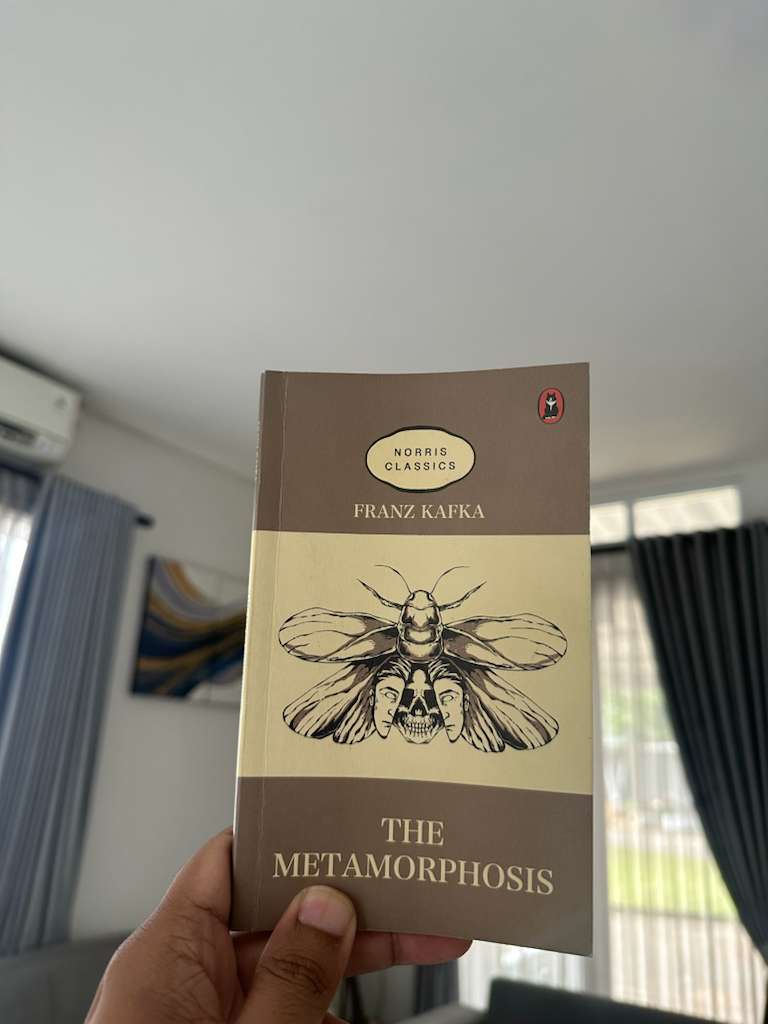
Many movies or stories are meant simply to be enjoyed, without the need to search for a moral or hidden message. However, while reading The Metamorphosis, I felt a depth of emotion that made it difficult to treat the story as “just fiction.” There was an unmistakable heaviness an emotional weight that lingered long after I finished reading.
Later, after learning more about Franz Kafka’s life how lonely, painful, and, in many ways, tragic it was I began to see the story differently. It felt as though Kafka was quietly describing his own existence through Gregor Samsa’s transformation. The absurdity, the isolation, the silent suffering all of it suddenly felt deeply personal.
These are some notes I took from reading The Metamorphosis, which also happens to be the first fiction book I read this year:
1. A Person’s Worth Is Often Reduced to Their Utility
Gregor Samsa is valued by his family only as long as he can work and provide money. The moment he becomes unable to contribute, he is no longer seen as a son or a brother, but as a burden.
Reflection:
Society and sometimes even family can measure human worth by productivity rather than humanity.
2. Dehumanization Happens Quietly
Gregor’s transformation into an insect is shocking, but what is far more disturbing is how quickly everyone adapts to treating him as less than human.
Reflection:
People don’t need to physically turn into monsters to be dehumanized. Neglect, indifference, and silence are often enough.
3. Isolation Destroys the Self
Even before becoming an insect, Gregor already lives in isolation trapped in a job he hates, carrying responsibilities he never chose, and lacking genuine connection.
Reflection:
A life without true connection and self-expression leads to emotional and spiritual decay.
4. Sacrifice Without Boundaries Leads to Self-Erasure
Gregor gives up everything his dreams, freedom, and identity for his family. Yet his sacrifices are never truly acknowledged or appreciated.
Reflection:
Self-sacrifice without mutual care does not create love; it slowly erases the self.
5. Modern Life Is Absurd and Unforgiving
Gregor never understands why this happens to him. No explanation is given. Life simply moves on.
Reflection:
The world is often irrational, and suffering does not always come with meaning, closure, or justice.
6. Empathy Is Conditional and Fragile
Grete initially shows compassion and care for Gregor, but as the burden grows heavier, her empathy fades.
Reflection:
Empathy often depends on convenience. When caring becomes difficult, people may choose comfort over kindness.
Many of these themes resonate deeply with me, especially in relation to my current situation. The Metamorphosis doesn’t just tell a story it makes you feel stress, frustration, and helplessness through its writing.
I would strongly recommend this book to anyone who wants to experience how powerful literature can be in conveying emotional pressure and inner suffering. Kafka didn’t just write about despair he made the reader live inside it.